tencent cloud

Tencent Kubernetes Engine

Release Notes and Announcements
Release Notes
Announcements
Release Notes
Product Introduction
Overview
Strengths
Architecture
Scenarios
Features
Concepts
Native Kubernetes Terms
Common High-Risk Operations
Regions and Availability Zones
Service Regions and Service Providers
Open Source Components
Purchase Guide
Purchase Instructions
Purchase a TKE General Cluster
Purchasing Native Nodes
Purchasing a Super Node
Getting Started
Beginner’s Guide
Quickly Creating a Standard Cluster
Examples
Container Application Deployment Check List
Cluster Configuration
General Cluster Overview
Cluster Management
Network Management
Storage Management
Node Management
GPU Resource Management
Remote Terminals
Application Configuration
Workload Management
Service and Configuration Management
Component and Application Management
Auto Scaling
Container Login Methods
Observability Configuration
Ops Observability
Cost Insights and Optimization
Scheduler Configuration
Scheduling Component Overview
Resource Utilization Optimization Scheduling
Business Priority Assurance Scheduling
QoS Awareness Scheduling
Security and Stability
TKE Security Group Settings
Identity Authentication and Authorization
Application Security
Multi-cluster Management
Planned Upgrade
Backup Center
Cloud Native Service Guide
Cloud Service for etcd
TMP
TKE Serverless Cluster Guide
TKE Registered Cluster Guide
Use Cases
Cluster
Serverless Cluster
Scheduling
Security
Service Deployment
Network
Release
Logs
Monitoring
OPS
Terraform
DevOps
Auto Scaling
Containerization
Microservice
Cost Management
Hybrid Cloud
AI
Troubleshooting
Disk Full
High Workload
Memory Fragmentation
Cluster DNS Troubleshooting
Cluster kube-proxy Troubleshooting
Cluster API Server Inaccessibility Troubleshooting
Service and Ingress Inaccessibility Troubleshooting
Common Service & Ingress Errors and Solutions
Engel Ingres appears in Connechtin Reverside
CLB Ingress Creation Error
Troubleshooting for Pod Network Inaccessibility
Pod Status Exception and Handling
Authorizing Tencent Cloud OPS Team for Troubleshooting
CLB Loopback
API Documentation
History
Introduction
API Category
Making API Requests
Elastic Cluster APIs
Resource Reserved Coupon APIs
Cluster APIs
Third-party Node APIs
Relevant APIs for Addon
Network APIs
Node APIs
Node Pool APIs
TKE Edge Cluster APIs
Cloud Native Monitoring APIs
Scaling group APIs
Super Node APIs
Other APIs
Data Types
Error Codes
TKE API 2022-05-01
FAQs
TKE General Cluster
TKE Serverless Cluster
About OPS
Hidden Danger Handling
About Services
Image Repositories
About Remote Terminals
Event FAQs
Resource Management
Service Agreement
TKE Service Level Agreement
TKE Serverless Service Level Agreement
Contact Us
Glossary

Smooth Workload Upgrade

PDF
Modo Foco
Tamanho da Fonte
Última atualização: 2024-12-19 21:49:45
After the problem of decreased availability caused during a Service's single point of failure or node draining is solved, still another scenario that may cause availability decrease needs to be considered, that is, rolling update. A normal rolling update of a Service may affect the Service availability due to the following causes:

Lossy rolling update of the business

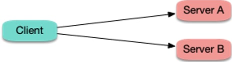
If there is a call between Services in the cluster:

When a rolling update is performed on the server:

Either of the following cases may occur:
Case 1. The old replica is immediately terminated, but kube-proxy on the client node hasn't updated all the forwarding rules and still schedules the new connection to the old replica. This will result in a connection exception, and the error "connection refused" (the process is being stopped and no longer receives new requests) or "no route to host" (the container is completely terminated, and its ENI and IP no longer exist) may be reported.
Case 2. The new replica starts, and kube-proxy on the client node immediately watches the new replica, updates the forwarding rules, and schedules the new connection to the new replica. However, a process, such as a Java process like Tomcat, starts slowly in the container, the port is not listened on, and thus the connection cannot be processed during startup, which also results in a connection exception, and the error "connection refused" will be reported generally.

Best practices

For case 1, you can add preStop to the container to make the Pod sleep for a while before being truly terminated, during which kube-proxy on the client node will update all the forwarding rules, and then the container will be terminated. In this case, the Pod can still run for a while after being terminated, during which it can still process requests normally if new requests are forwarded to it as forwarding rules are not updated promptly on the client, so as to avoid connection exceptions. This method sounds ungraceful but has a good effect. There is no silver bullet in a distributed architecture, and you can only try to find and implement the best solution under the current design.
For case 2, you can add ReadinessProbe to the container to make the Service Endpoint be updated only after all processes in the container are truly started. Then, kube-proxy on the client node will update the forwarding rules to forward the incoming traffic. This ensures that the traffic will be forwarded only after the Pod is completely ready and thus avoids connection exceptions. Sample YAML configuration:
readinessProbe:
httpGet:
path: /healthz
port: 80
httpHeaders:
- name: X-Custom-Header
value: Awesome
initialDelaySeconds: 10
timeoutSeconds: 1
lifecycle:
preStop:
exec:
command: ["/bin/bash", "-c", "sleep 10"]

Ajuda e Suporte

Esta página foi útil?

comentários
