tencent cloud

Chat

제품 소개
제품 개요
Basic Concepts
응용 시나리오
기능 소개
계정 시스템
사용자 정보 및 관계망
메시지 관리
그룹 시스템
Official Account
Audio/Video Call
사용 제한
구매 가이드
과금 개요
요금 안내
Purchase Instructions
Renewal Guide
연체 안내
Refund Policy
다운로드 센터
SDK & Demo 소스 코드
업데이트 로그
시나리오 솔루션
Live Streaming Setup Guide
AI Chatbot
대규모 엔터테인먼트 협업 커뮤니티
Discord 구현 가이드
IM을 게임에 통합하는 방법
WhatsApp Channel-style Official Account Integration Solution
Send Red Packet
Firewall Restrictions
클라이언트 APIs
SDK API(Web)
Android
iOS & macOS
Swift
Flutter
Electron
Unity
React Native
C APIs
C++
서버 APIs
Secure authentication with UserSig
RESTful APIs
Webhooks
콘솔 가이드
New Console Introduction
애플리케이션 생성 및 업그레이드
기본 설정
기능 설정
계정 관리
그룹 관리
Official Channel Management
콜백 설정
모니터링 대시보드
Viewing Guide for Resource Packages
Real-Time Monitor
개발 보조 툴
액세스 관리
Advanced Features
FAQ
uni-app FAQs
구매
SDK 관련 질문
계정 인증
사용자 정보 및 관계망
메시지
그룹
라이브 방송 그룹
닉네임 및 프로필 사진
협약 및 인증
Service Level Agreement
컴플라이언스 인증
IM 정책
개인 정보 보호 정책
데이터 개인 정보 보호 및 보안 계약
에러 코드
문의하기

Android(Compose)

フォーカスモード
フォントサイズ
最終更新日: 2026-03-02 18:03:19

Component Overview

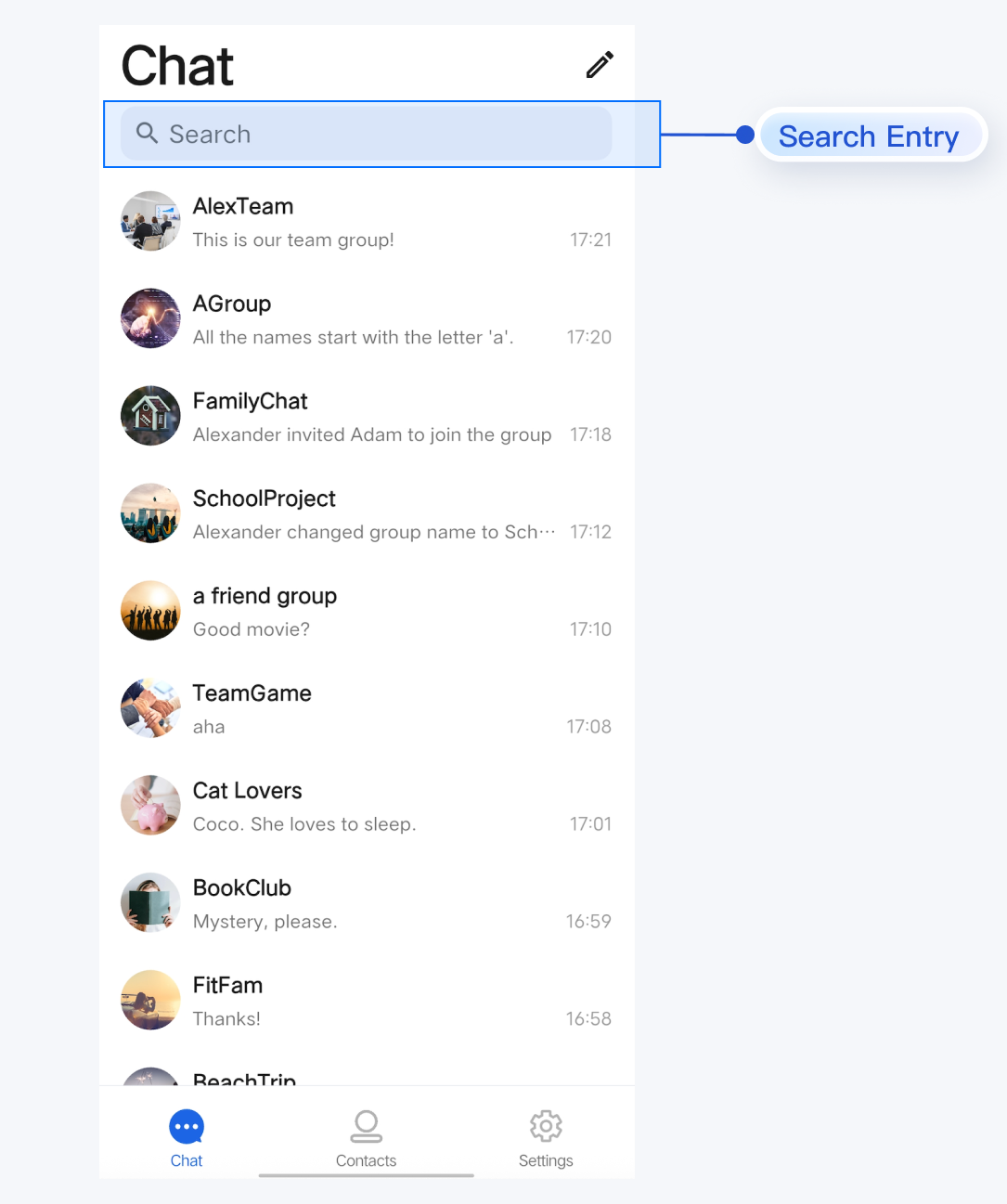
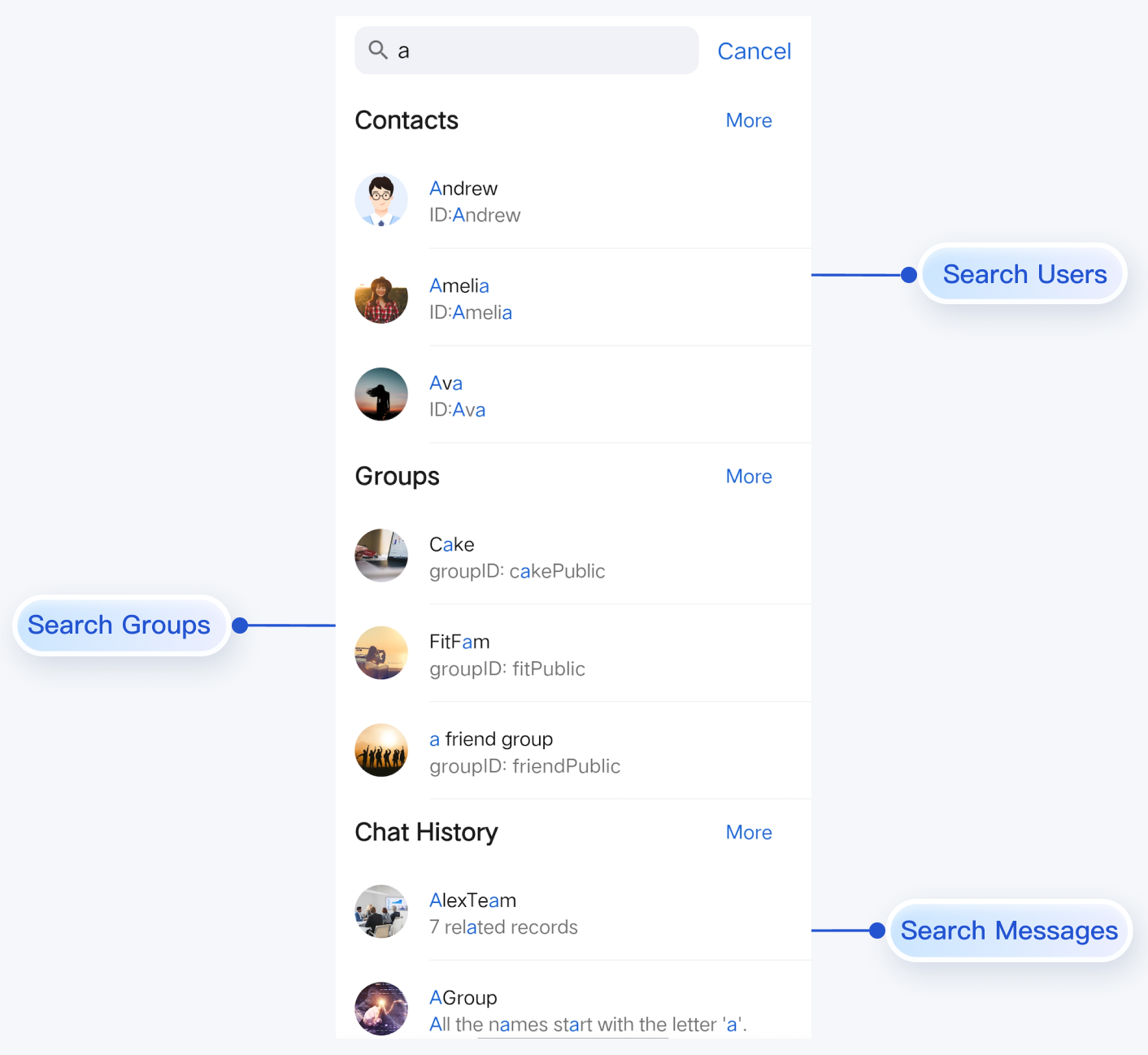
Search component provides users with a complete set of features, including a search box, search results display, and navigation within the interface. The component supports user search, group search, and message search, and offers a comprehensive set of interactive webhook interfaces.
Note:
Search function is available in the Pro edition or Enterprise edition. You can use this feature after purchasing the Pro edition or Enterprise edition package. For details, see Pricing Information.
Search Entry
Search Results


Component Integration

The Search component is included in TUIKit Compose. To use the Search component, integrate TUIKit Compose into your project. For integration instructions, refer to the TUIKit Compose documentation and complete the login process.

Component Structure

SearchScreen is the entry point for the Search component. It only exposes the initialization method for the search component; all other logic is encapsulated within SearchScreen.
Method
Parameter
Description
SearchScreen
modifier: Modifier
Used in Jetpack Compose to set the style, layout, behavior, and appearance of the component.
onBack: () -> Unit
Webhook triggered when the Cancel button is clicked; optional parameter.
onContactSelect: (FriendSearchInfo) -> Unit
Webhook triggered when a searched contact item is clicked; optional parameter.
onGroupSelect: (GroupSearchInfo) -> Unit
Webhook triggered when a searched group item is clicked; optional parameter.
onConversationSelect: (MessageSearchResultItem) -> Unit
Webhook triggered when a searched conversation item is clicked; optional parameter.
onMessageSelect: (MessageInfo) -> Unit
Webhook triggered when a searched message item is clicked; optional parameter.

Basic Usage

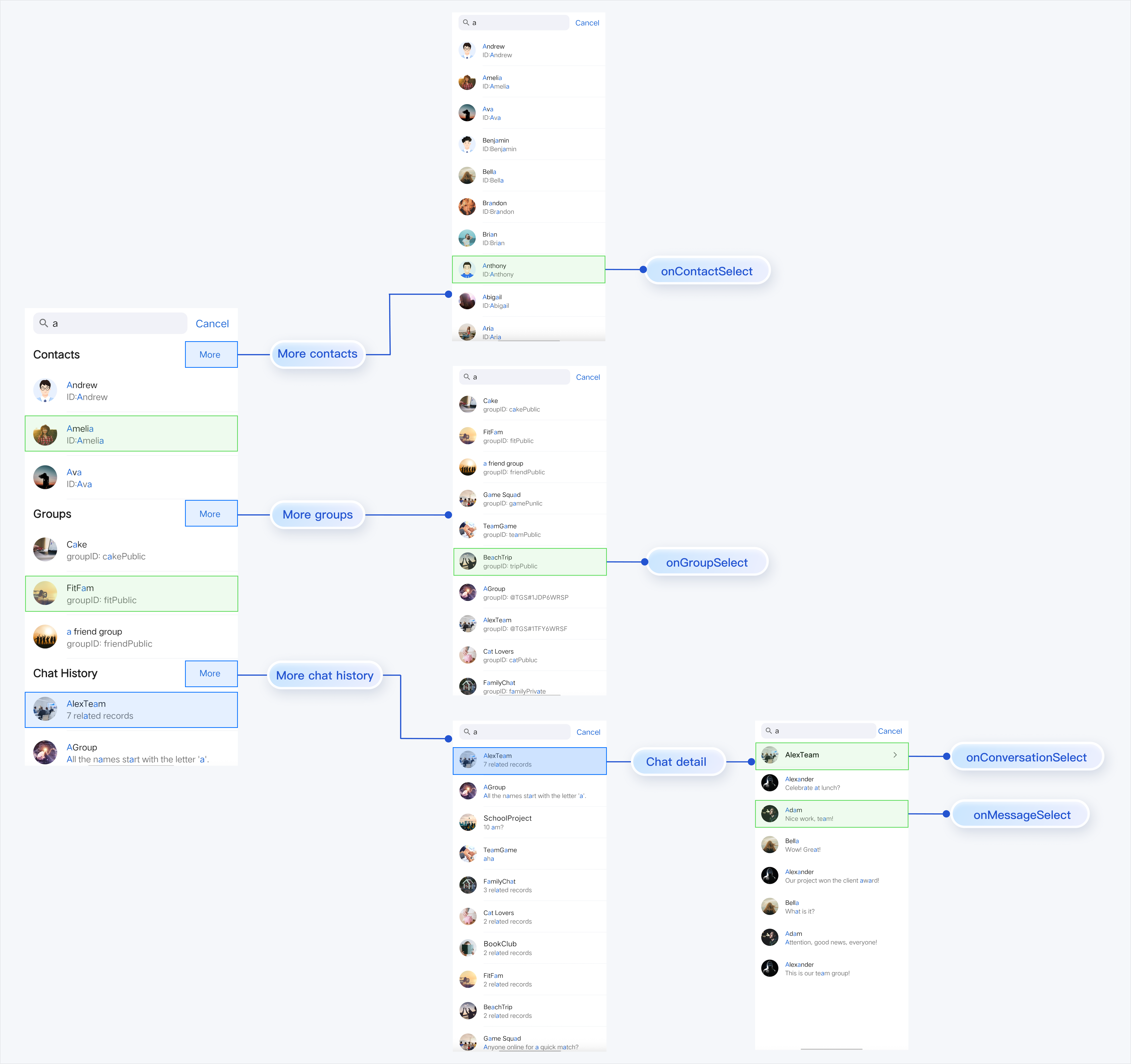
The routing logic for search results in SearchScreen is as follows:
Automatic Routing: On the search results page, clicking the More button or a chat record entry will automatically trigger internal navigation handled by the component.
Custom Routing: When a user clicks a specific contact, group, conversation, or message, the component triggers the corresponding webhook (onContactSelect, onGroupSelect, onConversationSelect, or onMessageSelect). You must implement custom navigation in these webhook handlers (for example, navigating to your custom chat interface).
Example:

Initialize the SearchScreen component as shown below:
SearchScreen(
modifier = Modifier.Companion
.fillMaxSize()
.statusBarsPadding()
.navigationBarsPadding(),
onBack = {
// Cancel button click event
},
onContactSelect = {
// Contact click event
},
onGroupSelect = {
// Group click event
},
onConversationSelect = {
// Conversation click event
},
onMessageSelect = {
// Message click event
}
)


ヘルプとサポート

この記事はお役に立ちましたか?

フィードバック