tencent cloud

Event Bridge

Release Notes and Announcements
Release Notes
[July 19, 2024] Solution to CLS Billing Issues for EB Topics
User Tutorial
Product Introduction
Overview
Basic Concepts
Strengths
Use Cases
Limits
Purchase Guide
Billing Overview
Product Pricing
Overdue Payments and Service Suspension
Getting Started
Activating EventBridge
Quickly Delivering Custom Events
Quickly Configuring Cloud Monitor Event Alarm Push
Event Source
Overview
Tencent Cloud Service Event Source
Event Structure
Connector
Event
Event Structure
Custom Event
Tencent Cloud Service Event
Event Bus
Overview
Creating Event Bus
Managing Event Bus
Linkage Tracing
Event Rule
Overview
Event Pattern
Creating Event Rule
Managing Event Rule
Configuring Data Conversion
Event Target
SCF Target
CLS Log Target
Message Push Target
CKafka Target
Practical Tutorial
Migrating Event Alarm
Real-Time Oceanus Alarm Message Push
Automatic Backup and Restart of Exceptional CVM Instance
Planning a EventBridge-based Midplatform for a Retail Business
API Documentation
History
Introduction
API Category
Making API Requests
Delivery Target APIs
Event Bus APIs
Event Rule APIs
Event Connector APIs
Data Transformer APIs
Event Storage APIs
Data Types
Error Codes
FAQs
Concept
Alarm
Billing
Contact Us
EB Policy
Privacy Policy
Data Processing And Security Agreement

Configuring TDMQ Connector

PDF
Focus Mode
Font Size
Last updated: 2024-07-23 15:08:07

Overview

You can configure a TDMQ connector to consume content in TDMQ message queues. A TDMQ connector is implemented in the pull pattern. It automatically pulls TDMQ content and routes events to relevant services through event rules. This document describes how to create a TDMQ connector and the structure of events generated by the TDMQ connector.
Note
Currently, a TDMQ connector can consume only content in TDMQ-Pulsar message queues.

Prerequisites

Directions

1. Log in to the EventBridge console and click Event Bus in the left sidebar.
2. In the Event Bus list, select the event bus for which you want to configure a TDMQ connector.
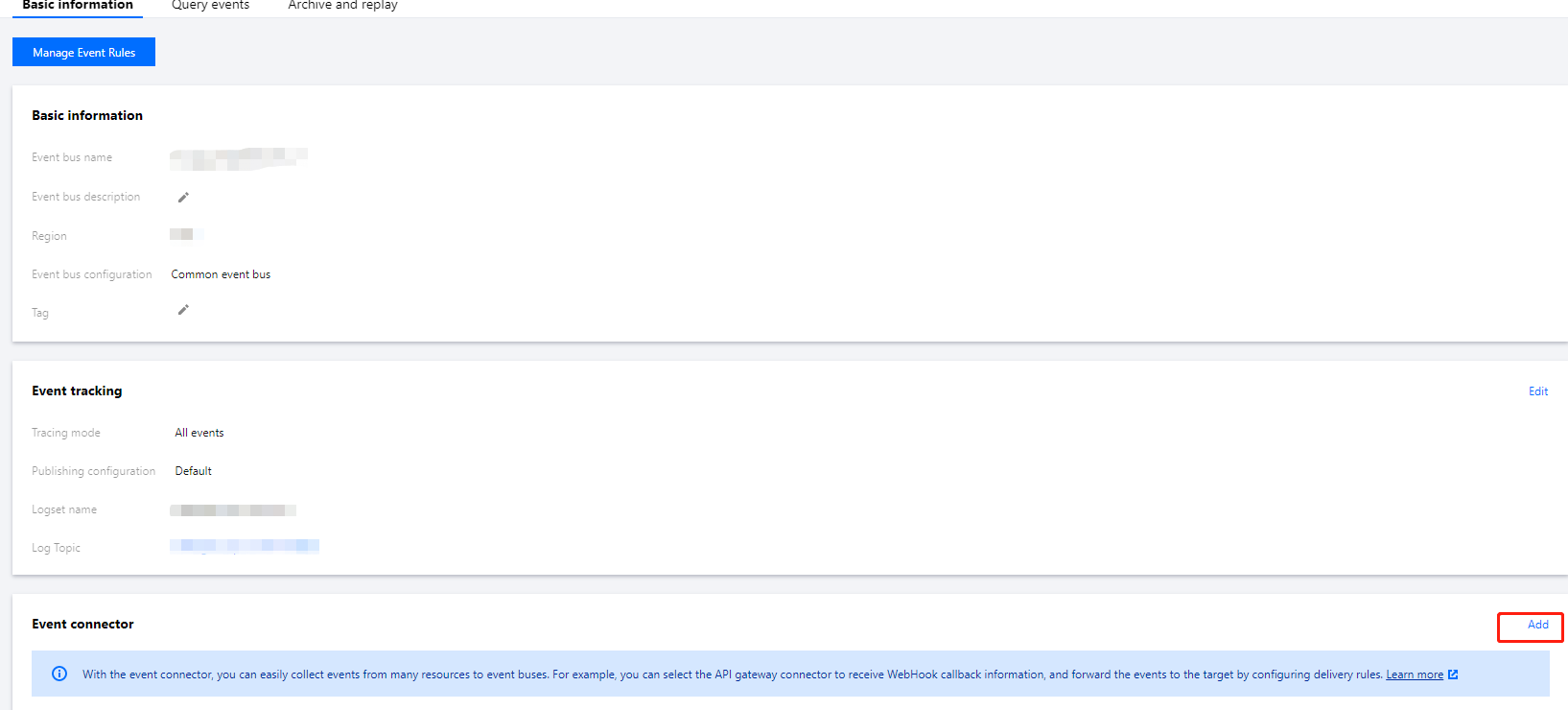
3. On the Event bus details page, click Add in the Event connector section.

4. In the Create event connector window, set parameters as prompted. Here, select Message queue (TDMQ) for Connector type** and set other parameters as prompted.
5. Click OK.
6. Click Event rule in the left sidebar.
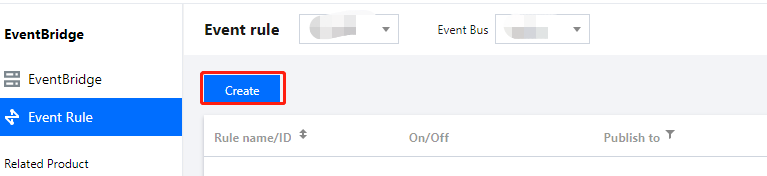
7. In the drop-down lists at the top of the Event rule page, select the same connector information as that set during connector creation and click Create event rule, as shown below:

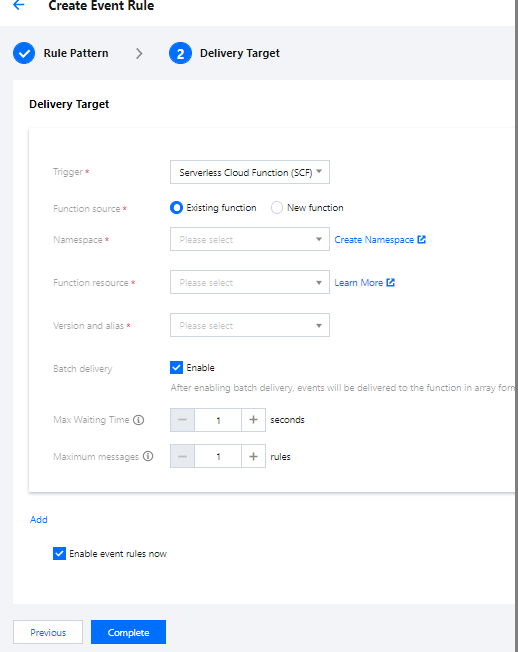
8. Set parameters as prompted, as shown below:

Here, select Message queue (TDMQ) for Tencent Cloud service and configure the event target.
9. Click OK.

TDMQ connector data structure description

{
"specversion": "1.0",
"id": "13a3f42d-7258-4ada-da6d-023a333b4662",
"type": "connector:tdmq",
"source": "tdmq.cloud.tencent",
"subject": "qcs::tdmq:$region:$account:topicName/$topicSets.clusterId/$topicSets.environmentId/$topicSets.topicName/$topicSets.subscriptionName",
"time": "1615430559146",
"region": "ap-guangzhou",
"datacontenttype": "application/json;charset=utf-8",
"data": {
"topic": "persistent://appid/namespace/topic-1",
"tags": "testtopic",
"TopicType": "0",
"subscriptionName": "xxxxxx",
"toTimestamp": "1603352765001",
"partitions": "0",
"msgId": "123345346",
"msgBody": "Hello from TDMQ!"
}
}
The parameters are described as follows:
Parameter
Description
topic
Complete topic path, such as persistent://appid/namespace/topic-1.
tags
TDMQ tags.
topictype
Topic type. Valid values:
0: general message
1: globally sequential message
2: partitional sequential message
3: retry letter topic
4: dead letter topic
subscriptionName
Subscription name.
timestamp
Timestamp, which is accurate to milliseconds.
partitions
Partitions consumed by a TDMQ message queue.
msgId
TDMQ message ID.
msgBody
TDMQ message body.


Help and Support

Was this page helpful?

Help us improve! Rate your documentation experience in 5 mins.

Feedback